PLC
HMI
IPC
SCADA
Industry Knowledge
Posted on:
September 2, 2026Grey space: the half of the data center that isn't on the tour

14 minute read
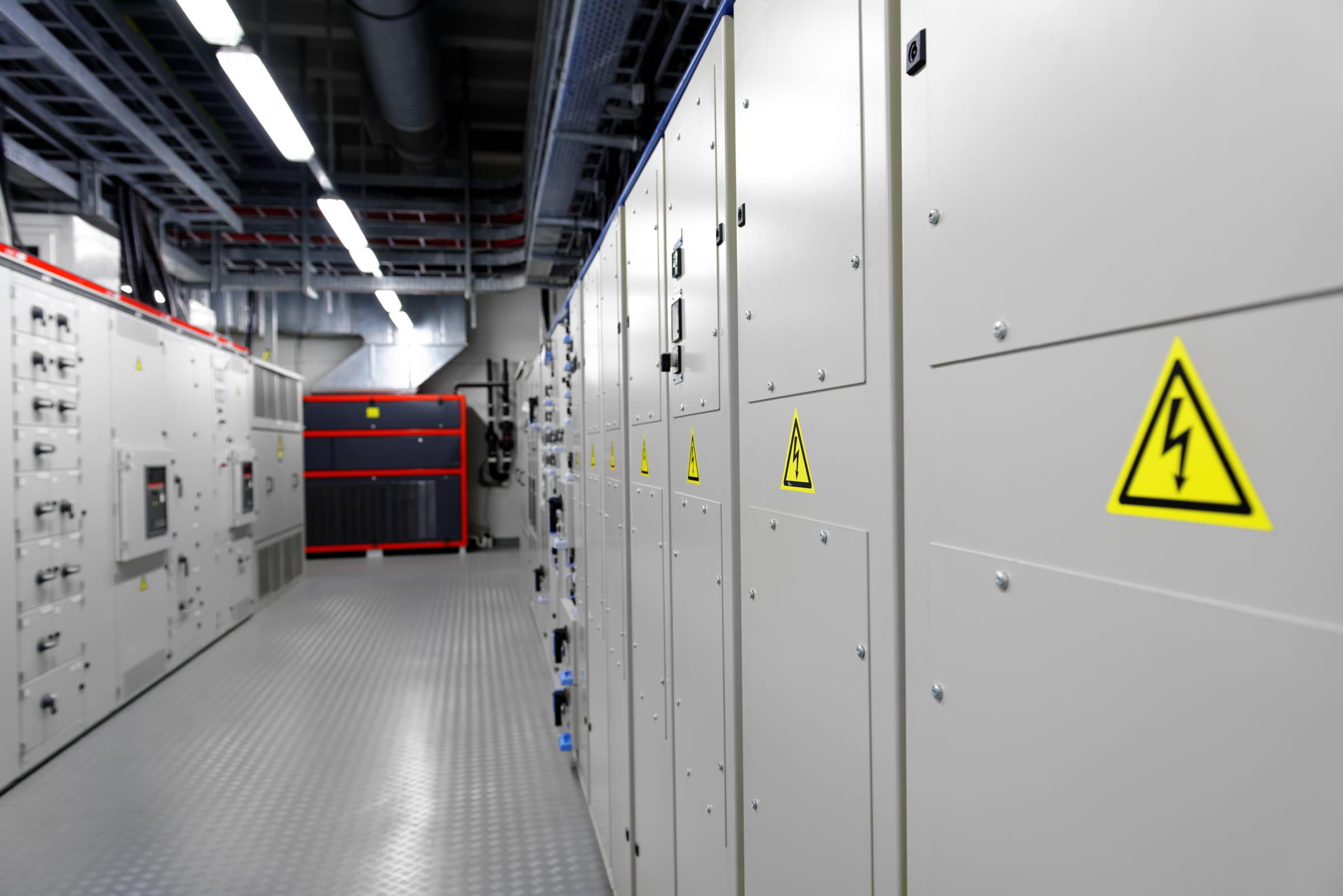
If you have ever toured a new data center, the tour probably focused on the white space: rows of racks, containment, cabling, and the computing equipment itself. What the tour usually spends less time on is everything that keeps that white space running.
Behind the racks are mechanical yards, switchgear rooms, pump skids, UPS systems, generators, and control panels: the infrastructure generally grouped under grey space.
Across the grey space, equipment is controlled by a mix of PLCs, embedded OEM controllers, protective relays, generator controllers, and other dedicated control systems. Many of those systems have a local HMI for technicians and communicate upstream to supervisory platforms such as a BMS, EPMS, SCADA system, or DCIM platform.
A quick map of the grey space
The mechanical and electrical side of a data center breaks down into several major systems. Each has its own control requirements, and many have local controllers that continue operating even when the higher-level supervisory system is unavailable.
Chilled water plant
A chilled-water plant typically includes chillers, cooling towers, condenser-water pumps, chilled-water pumps, heat exchangers, and the valves that connect them.
Plant controls sequence equipment as load changes, maintain supply-water temperatures and pressures, rotate equipment for runtime balancing, and respond to failures or maintenance conditions.
Liquid cooling system
High-density AI infrastructure is accelerating the use of direct liquid cooling. In a common direct-to-chip architecture, coolant flows through cold plates attached to processors and other high-heat components. A coolant distribution unit, or CDU, manages the technology-cooling loop and, in liquid-to-liquid designs, transfers heat to the facility-water system.
In a liquid-to-liquid CDU, the facility water system (FWS) and the technology cooling system (TCS) are hydraulically separated by a heat exchanger. The package typically includes pumps, filtration, valves, temperature and pressure instrumentation, local controls, and a reservoir and/or expansion vessel where required. The controller maintains the required TCS supply condition and flow or differential pressure for the rack loop, based on the IT equipment and cooling-system design limits.
Essential regulation and protective functions should remain local to the CDU or packaged cooling controller. Loss of the BMS, SCADA server, or supervisory network should not interrupt basic coolant regulation and equipment protection.
Air-side cooling
Liquid cooling does not eliminate air cooling. Air-side systems still remove heat that is not captured by the liquid loop and serve lower-density IT equipment.
Even direct-to-chip systems leave residual rack heat for the air system to remove. The 2026 PNNL/ASHRAE/NEMA AI Data Center Energy Performance Framework puts that at roughly 10 to 30 percent of rack heat in hybrid designs.
Electrical system
Controls and protection across the electrical system cover medium- and low-voltage switchgear, UPS systems, transfer equipment, generator controls, and paralleling gear where applicable.
When utility power is lost, critical loads do not simply wait for the generators to start. In a typical UPS-backed critical-power architecture, the UPS provides immediate ride-through while generator and switchgear controls manage startup, synchronization or paralleling where required, load transfer, and eventual restoration to normal service.
The exact sequence depends on the electrical topology.
Monitoring, leak detection, and life-safety interfaces
Data centers also depend on systems that monitor conditions and, where required, initiate protective actions. These include leak detection around liquid-cooling distribution, rack manifolds and piping, fire-alarm and suppression interfaces, environmental monitoring, and alarms associated with mechanical and electrical equipment.
Water treatment for cooling towers and other open-water systems is part of the mechanical-water system rather than life safety, but it is another important piece of facility operation.
The supervisory layer
Most large facilities have several supervisory systems above the equipment-control layer, and their responsibilities overlap without being identical.
A BMS, or building management system, typically supervises mechanical and building systems.
An EPMS, or electrical power monitoring system, focuses on the electrical distribution system.
A SCADA platform provides supervisory monitoring and control over industrial processes and equipment.
A DCIM platform may combine infrastructure information with capacity, asset, power, and IT-related data.
Many large data centers use several of these systems at the same time and exchange data between them. To the operator, it may look like one integrated facility. Underneath that interface, however, dozens or hundreds of local controllers are still responsible for keeping individual pieces of equipment stable and safe.
What changed when the racks got hot
A traditional enterprise rack might have operated in the single-digit or low-teens kilowatt range. Beyond roughly 40 to 50 kW per rack, conventional air cooling becomes increasingly difficult and space-intensive.
Well-designed air systems can support substantial rack densities, but airflow, fan energy, heat-transfer area, containment, and space all get harder to manage as density climbs. The PNNL/ASHRAE/NEMA framework recommends against cooling high-density AI clusters, using more than 50 kW per rack as its example, solely with air.
High-density AI systems have pushed the issue much further. NVIDIA documentation lists a designed rack power of 120 kW for GB200 NVL72 and 135 kW for GB300 NVL72, and public roadmaps extend toward substantially higher rack densities.
Direct-to-chip cold-plate cooling is one of the leading approaches for high-density AI systems. Rear-door heat exchangers, immersion, and hybrid architectures are also used.
Cooling failures leave less ride-through
Large chilled-water systems can contain substantial water volume and thermal inertia, giving the plant some ride-through during a disturbance. At the server, that margin can be far shorter. Uptime Institute has reported that some water or single-phase dielectric cold-plate systems may have less than ten seconds of thermal ride-through following cooling loss.
That makes local reliability, redundant pumping, power continuity, instrumentation, and fault response much more important. Fast regulation and equipment protection remain local and operate at the response rate the process requires: a PLC, embedded CDU controller, or other local controller keeps regulating supply temperature, differential pressure, flow, pumps, valves, and protective logic if communication with the BMS or SCADA layer is lost.
Supervisory analytics can optimize the plant. They should not be the only thing keeping coolant flowing.
The load can move quickly
AI workloads can create large, coordinated step changes in power demand when many accelerators change operating state together. The electrical system sees that change first; the resulting thermal load then propagates through the chips, cold plates, and coolant loop.
Fast regulation and protection stay local; plant-wide optimization, trending, scheduling, and operator visibility belong to the supervisory layer.
Fault visibility matters more
At high rack densities, a nuisance trip can remove a large amount of compute capacity at once. When a pump, CDU, breaker, UPS module, or generator changes state, redundancy only helps if operators can see what changed, what backup equipment responded, and what capacity remains.
That gets harder if the person responding has to reconstruct the event across separate BMS, EPMS, SCADA, equipment-controller, and relay interfaces.
Compressed commissioning schedules make this especially important, because alarm organization and operator displays are often among the last pieces finished.
Grid operators are paying closer attention to large loads
A single data-center campus can add hundreds of megawatts of demand, making large-load behavior a grid-planning issue as well as a facility issue. Large projects can also appear on a grid much faster than conventional generation or transmission can be built.
Texas has become one of the clearest examples of how regulation is changing in response.
Texas Senate Bill 6, enacted in 2025, created several new requirements affecting large loads in ERCOT.
One provision requires utilities serving applicable transmission-voltage customers interconnected after December 31, 2025 to establish a firm-load-shed protocol and install, or require the installation of, the equipment needed to curtail those loads, subject to statutory exceptions.
Separately, SB 6 directs the PUC and ERCOT to establish a reliability service that can procure demand reductions from large-load customers with demand of at least 75 MW.
SB 6 also addresses certain sites with substantial on-site backup generation. For applicable large loads with non-exporting backup generation capable of serving at least half of onsite demand, ERCOT may, under specified emergency conditions, require the utility to direct the customer to reduce demand or operate qualifying backup generation.
ERCOT’s NOGRR 282, approved by the PUCT, adds ride-through requirements for large computational loads.
NOGRR 282 establishes voltage- and frequency-ride-through requirements for Large Computational Loads, measured at the service delivery point, and constrains how site protection is allowed to operate. Under the related ERCOT rules, that category includes loads of at least 75 MW where 50% or more of site demand consists of power-electronic-based computational load. At the national level, NERC issued a Level 3 Computational Load Alert in May 2026, and FERC has directed NERC to file new or modified reliability standards for computational-load integration by December 31, 2026.
The challenge is not limited to the IT load. A voltage disturbance can trip VFD-driven pumps or chiller auxiliaries if their protection and ride-through settings are not coordinated, and a tripped chiller may be subject to restart or anti-recycle delays. A disturbance lasting fractions of a second can therefore produce a cooling interruption that lasts much longer. For liquid-cooled IT with very little thermal ride-through, that recovery time matters.
NOGRR 289, pending as of publication, would allow an applicable Large Computational Load up to 365 days after its in-service date to achieve compliance where its cooling load cannot initially meet the NOGRR 282 ride-through requirements because of ongoing equipment design or manufacturing limitations, including constraints affecting chillers and VFDs. That can be a grey-space controls problem: the equipment limiting site ride-through may be in the mechanical plant rather than the IT hall.
Implementation is still evolving on both fronts. As of publication, ERCOT has additional stakeholder work on SB 6 large-load curtailment scheduled for October 2026, and NOGRR 289 is pending, so project teams should verify the current rules and protocols for a specific interconnection.
Firm load shed, contracted load reduction, onsite generation, generator dispatch, ride-through, and normal emergency-power operation are different control functions with different requirements.
The site still has to know what load can be shed, what generation is available, how transfers are sequenced, how the site rides through a disturbance, what state the electrical system is in, and what happened during the event.
Depending on the site, controls may need to:
- shed selected loads according to the site’s load-shed strategy;
- coordinate onsite generation;
- manage transfer or paralleling sequences;
- maintain operating limits during the transition;
- coordinate protection and controls so the applicable site load can meet voltage- and frequency-ride-through requirements, including affected cooling equipment and VFD-driven loads;
- and provide time-synchronized event records for alarms, commands, equipment states, and operator actions, with controllers, relays, and supervisory systems synchronized to the site’s common time source.
Load shedding, generator control, transfer sequencing, and ride-through are established control functions. The difference is the scale of the load and how early these requirements now enter the interconnection discussion.
Building fast changes what you need from a controls supplier
Skilled electrical, mechanical, controls, and commissioning labor is another constraint on fast data-center construction.
One response has been to move more work offsite. Prefabricated cooling skids, electrical modules, power rooms, pump packages, and control panels can arrive with much of their hardware already mounted, wired, programmed, and tested. That approach reduces field labor, but it also puts more pressure on the equipment suppliers.
Lead time
- A controller on backorder can delay a control panel.
- The control panel can delay a skid.
- The skid can delay a mechanical system.
- And that can delay the hall.
For a large repeat-build program, a few weeks of component lead time can matter as much as a small difference in hardware cost, so availability belongs in the engineering decision.
Protocol coverage
There is no single communications protocol across a data center.
- Mechanical
- Mechanical systems expose protocols such as BACnet/IP, Modbus TCP, and Modbus RTU.
- Electrical
- Electrical devices may use Modbus, IEC 61850, DNP3, or manufacturer-specific interfaces.
- Higher-level
- Higher-level systems exchange information through BACnet, OPC UA, MQTT, APIs, databases, or other integration layers.
Every interface that requires a separate gateway or translation layer adds another component to configure, secure, document, and maintain. Broad native driver support does not eliminate integration engineering, but it can reduce the number of gateways and translation layers in the system.
Where the supervisory software runs
Supervisory architectures vary. Some facilities use centrally hosted redundant servers; others place supervisory systems close to a plant, skid, or equipment group.
Running supervisory software on an industrial PC near the equipment can be useful when a project needs packaged-skid autonomy, local data retention, or a complete control package that can be factory-tested before arriving onsite. Browser clients then give authorized users access without dedicated client software on every workstation.
Browser access should still follow the site’s OT security architecture. Supervisory systems should remain segmented from public and enterprise networks as required, with authenticated access, encrypted communications, least-privilege user roles, and remote access routed through approved security controls. Web-based access is a client architecture, not a reason to expose controllers or supervisory servers directly to the Internet.
Support
A team working nights toward an energization date does not want to discover that a protocol setting, firmware revision, or driver configuration requires a three-day support cycle. Slow support during commissioning can put the schedule at risk.
Where CIMON fits
Data-center work has become an important part of our business, and it has influenced how we build, stock, and support our products.
One supplier for the control stack
CIMON develops PLCs, HMIs, and SCADA software and supplies industrial PCs configured and tested for industrial automation applications.
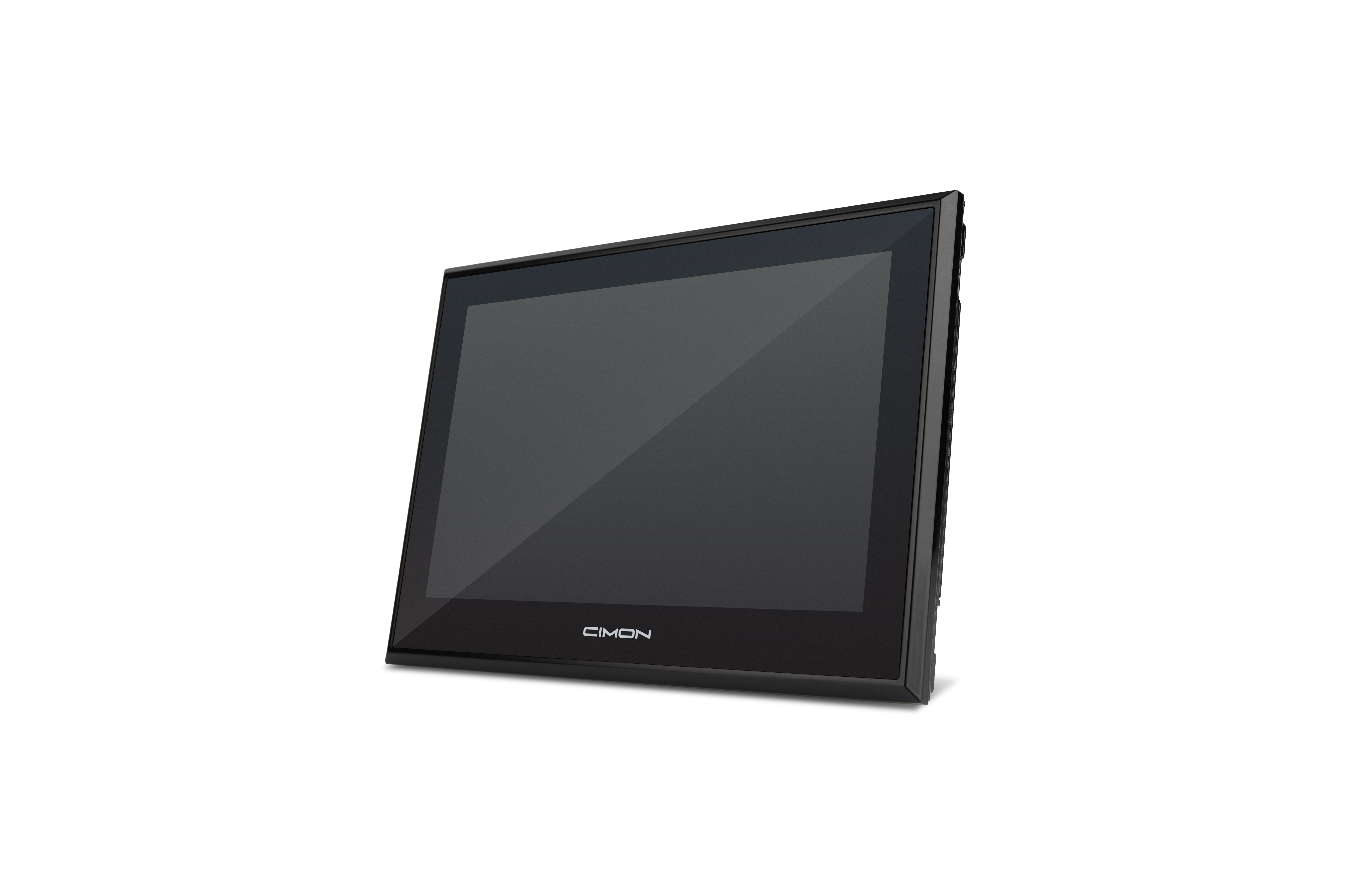
A typical package might use a PLC-S Plus or PLC-S controller for local equipment control, an Xpanel eXT2 HMI for local operator access, and UltimateAccess Web running on an NB Series industrial PC for supervisory functions.
For panel builders and system integrators, the PLC, HMI, industrial PC, and SCADA layer can come from the same supplier, which simplifies integration.
Protocol coverage without unnecessary gateways
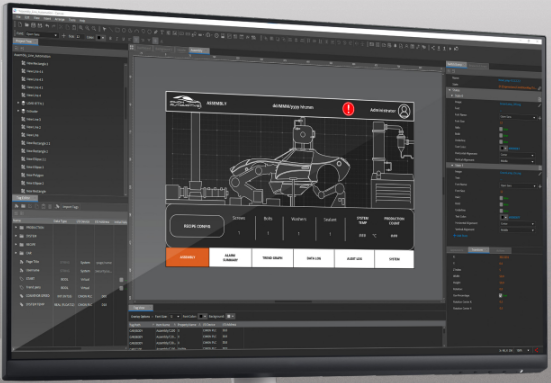
UltimateAccess Web ships with 400+ native communication drivers covering industrial protocols and device families, including Modbus, BACnet, OPC UA, IEC 61850 Edition 2, MQTT, and many others.
Driver availability is only the first check. You still have to verify the vendor implementation, register map or data model, certificates, network requirements, and the exact device revision.
Before the panel design is finalized, send us the equipment list and protocol requirements so we can verify driver coverage.
SCADA at the edge, viewed through the browser
For applications that benefit from local supervisory control, UltimateAccess Web can run on a fanless CIMON industrial PC close to the controlled equipment. Its HTML5 web interface allows authorized users to access the system from standard browser-equipped devices without installing a dedicated runtime on every client.
UltimateAccess Web also includes PostgreSQL/TimescaleDB-based historian capabilities, redundancy features, scripting, alarms, and audit functionality. For an operational or curtailment event, those alarms and audit records can form part of the time-stamped record of what the control system did.
A complete event record may also draw on EPMS data, sequence-of-events logs, protective-relay records, utility metering, and generator-controller logs.
Stock close to North American projects
Our U.S. inventory ships from Dallas, Texas.
For North American panel shops, OEMs, and integrators working against a skid or energization date, local inventory can reduce one of the risks that is hardest to engineer around: waiting for hardware.
Projects in other regions are supported through CIMON headquarters and our international network.
Hardware and software customization
Because CIMON supplies the hardware and develops the automation software, we can support project-specific requirements that go beyond a standard catalog configuration.
That can include IPC memory, storage, or communications configurations; customized HMI branding; preloaded customer projects; and software work such as communication drivers, scripting, or application-specific features.
That is especially useful on data-center programs where the same panel, skid, or control architecture is repeated across multiple halls or sites. A small design improvement becomes more valuable when it is multiplied by hundreds of panels.
Support that understands the product
CIMON’s PLC programming software is available without a software license fee, and technical support is provided directly by our team.
During commissioning, the integrator has one support path across the controller, HMI, industrial PC, and software.
The part nobody sees
None of the equipment in the white space runs for long without the grey space behind it.
As rack densities increase, liquid cooling expands, electrical loads become more dynamic, and utilities pay closer attention to large-load behavior, the controls layer carries more operational responsibility.
The fundamentals haven’t changed:
- local control that does not depend on a remote server
- clear ownership of each control loop
- predictable, tested fault behavior
- accurate instrumentation
- well-designed alarms
- interoperable communications
- resilient power
- an operator interface that makes the state of the facility understandable when something goes wrong
If you are putting controls into one of these buildings, send us the equipment list, protocol requirements, and energization date.
We will tell you what we can ship, when we can ship it, and which interfaces we can support natively.
Glossary
- White space
- The area containing IT racks and associated computing/network equipment.
- Grey space
- A commonly used term for the mechanical, electrical, power, and supporting infrastructure associated with operating the data hall. Exact usage varies by operator.
- CDU
- Coolant distribution unit. In many direct-liquid-cooling architectures, a CDU manages coolant flow and temperature and may hydraulically separate a technology-cooling loop from the facility-side heat-rejection system.
- TCS
- Technology Cooling System. The secondary cooling loop serving liquid-cooled IT equipment.
- FWS
- Facility Water System. The facility-side water system that may exchange heat with a CDU or other heat exchanger.
- CRAH / CRAC
- Computer room air handler / computer room air conditioner. Air-side cooling equipment used in data centers.
- Firm load shed
- An emergency grid action in which applicable loads are disconnected or reduced to maintain power-system reliability.
- SB 6
- Texas Senate Bill 6, enacted in 2025, which introduced new requirements affecting large loads, interconnection, load shedding, and certain backup-generation arrangements in ERCOT.
- NOGRR 282
- ERCOT Nodal Operating Guide Revision Request 282, approved by the PUCT. Sets voltage- and frequency-ride-through requirements for Large Computational Loads: under the related ERCOT rules, loads of at least 75 MW where 50% or more of site demand is power-electronic-based computational load. Effective August 1, 2026.
- NOGRR 289
- Proposed revision that would allow up to 365 days after the in-service date for applicable sites whose cooling load cannot initially meet NOGRR 282 because of equipment design or manufacturing limitations. Pending as of publication.
Sources
- PNNL / ASHRAE / NEMA
AI Data Center Energy Performance Framework (2026), Retrofit and Modernization Strategies - NVIDIA
Mission Control Systems Administration Guide 2.2.0, FAQ (designed rack power for GB200 and GB300 NVL72) - Uptime Institute
Performance expectations of liquid cooling need a reality check - Texas Legislature
Senate Bill 6, enrolled text, 89th Legislature (2025) - ERCOT
SB 6 Large Load Curtailment workshop, scheduled October 6, 2026 - ERCOT
NOGRR 282, Board Priority: Large Computational Load Ride-Through Requirements. PUCT approved July 9, 2026; effective August 1, 2026 - ERCOT
NOGRR 289, proposed compliance extension for cooling-load ride-through (pending as of publication)